The simplest recipe held up.
One start frame, the couple walking hand in hand, and the camera move written in words. The first good take came from this. Three unchanged re-rolls stayed continuous too; two landed the orbit to his face. Extra references bought control over a moment, sometimes at the cost of the journey between moments.
Build the space before the pixels.
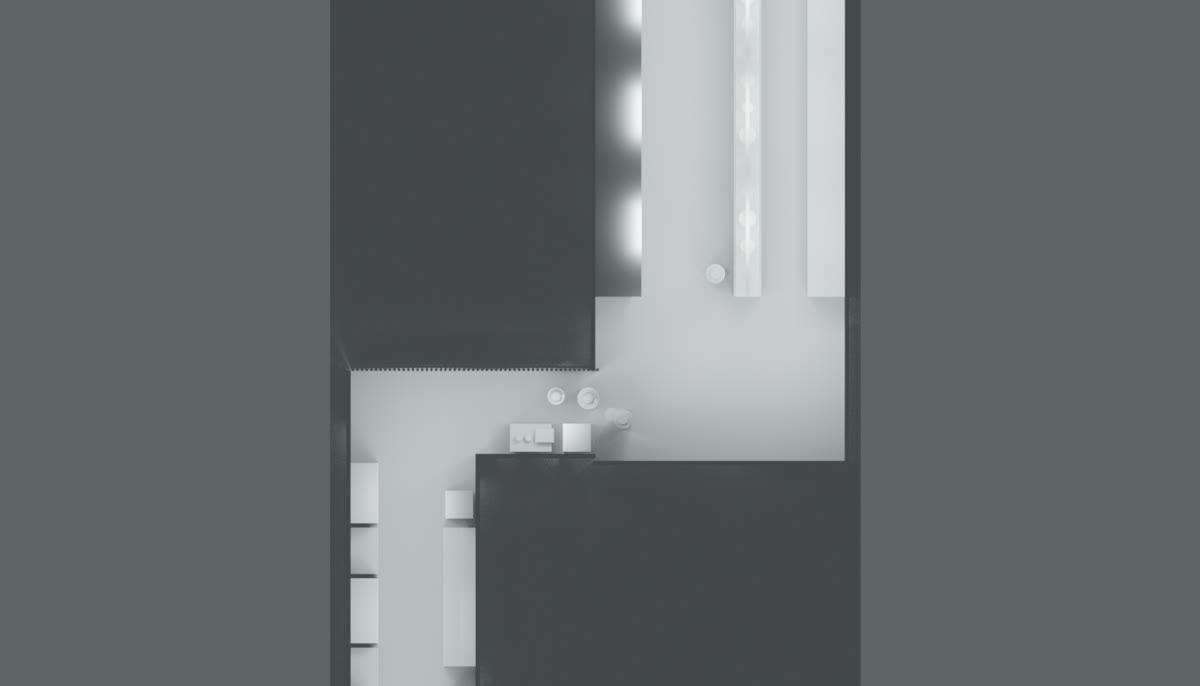
The study shot was the kitchen passage of the Copacabana long take in Goodfellas. The agents studied it locally, then built their own geometry. Every reference sent for generation came from their blockouts.
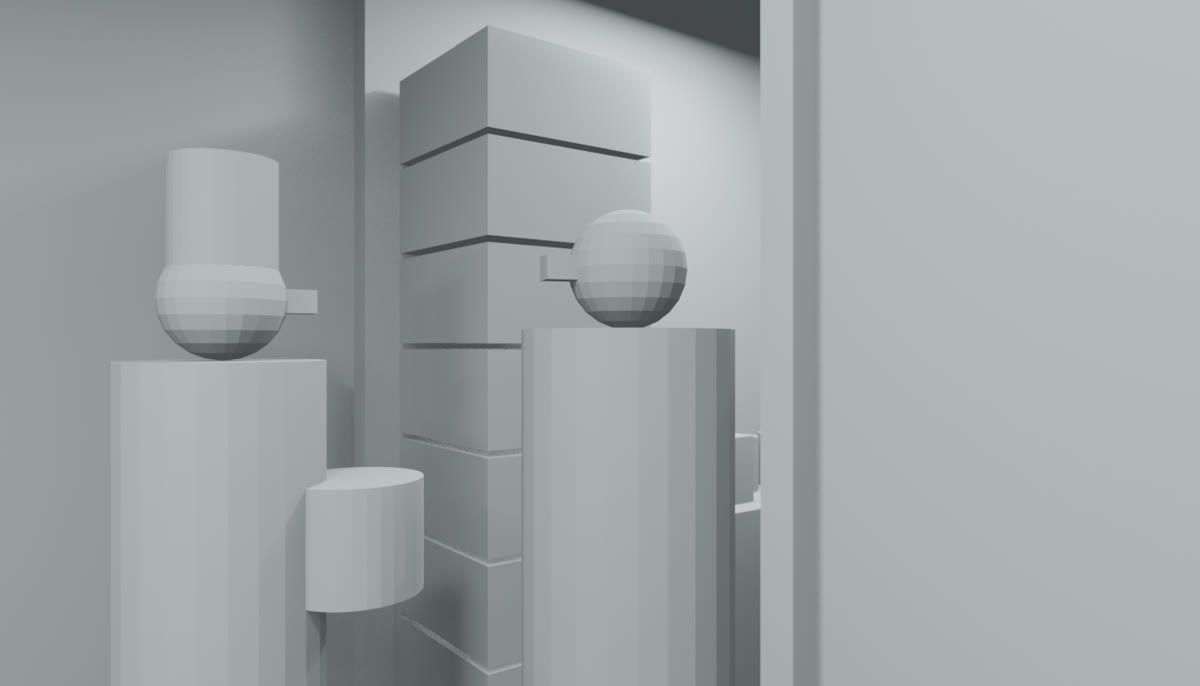
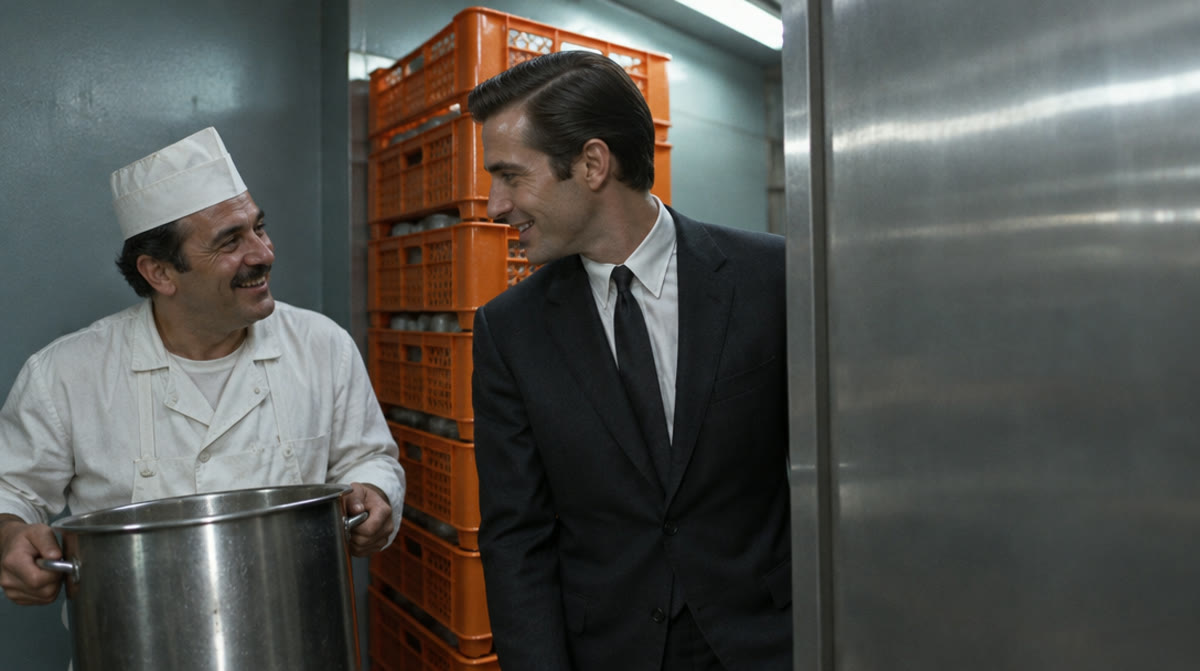
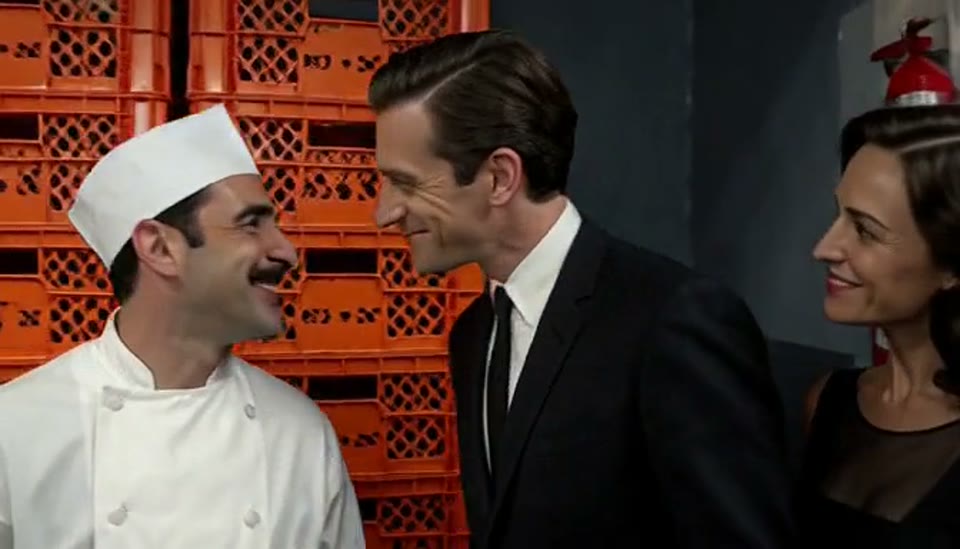
Blender
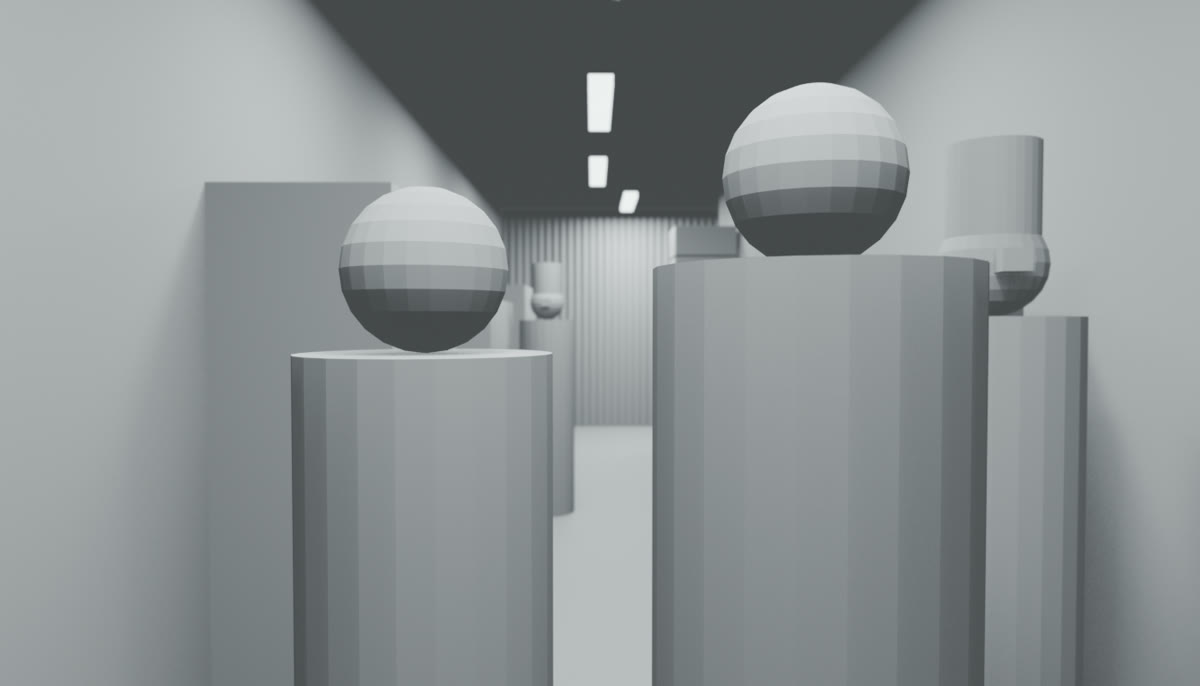
Area lights, shadows and a real camera were already there. An existing helper kept the scene small. Six grey stills took about 17 seconds to re-render.
Three.js
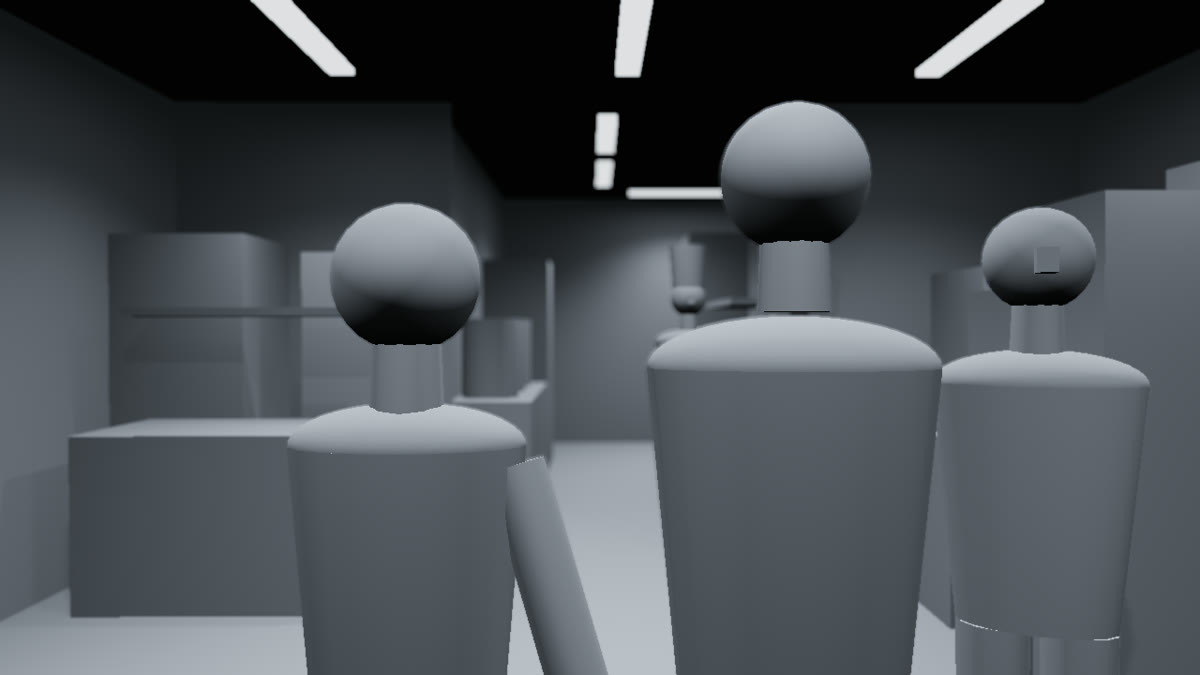
A scene in plain code, rendered in headless Chromium. Camera geometry was straightforward. Figures, lighting and the rendering harness were built from scratch.
| Recorded measure | Blender | Three.js |
|---|---|---|
| Blockout phase | 3 min 34 s | 8 min 11 s |
| Whole run | 19.4 min | 28.4 min |
| Agent tokens / tool calls | 218,038 / 91 | 240,941 / 113 |
| Recorded generation spend | $0.312 | $0.267 |
| Chosen take | Continuous | Jump at 7.25 s |
Blender had a helper; Three.js did not. The agents also chose different H3 conditioning strategies. This measures those runs, rather than isolating the engine’s effect on video quality.
The tool comparison was less decisive than it first looked. All three Three.js takes used painted frames as timed checkpoints. Each cut. Blender tried multiple frames and a fixed end frame too; both cut. Its successful take dropped back to one frame and words.
Then I kept adding control.
The next rounds tested moving previs, reference stills, more explicit prompts and a storyboard. The hard part was getting the camera ahead of the couple while they kept walking, then returning behind them.
Round 1
6 takes / 2 agents
The first good take needed one frame.
Blender was faster to block, but its best result also used a different recipe. Ordered keyframes became places to cut to. The single start frame left H3 room to travel.
Round 2
12 takes / 4 agents
A moving block can carry the orbit.
A previs with figures carried the camera ahead of the lead. A camera-only previs did not: the actors turned instead. The start-frame-and-words control stayed continuous in all three takes. H3 also copied errors in the block, including faces looking toward the lens.
One tool bug dropped the image references from three first takes. Those are labelled in the take browser: they are accidental previs-only conditions.
Round 3
9 takes / 3 agents
Reference stills helped. Extra prose did not.
Painted stills, described as references for space and facing rather than checkpoints, gave three continuous takes. Timed facing instructions caused side swaps and a wall that changed shape. Frame-by-frame review caught those failures; the automatic checker missed the important ones.
The review also caught two errors in my brief: the tray cook walks toward the camera, and the original’s swing goes around the lead’s right. Some earlier “failures” were correct.
Round 4
9 takes / 3 agents
Simple staging helped. Four stills brought cuts back.
“They walk hand in hand the whole time” kept the couple together more reliably. But four of six takes with four reference stills cut or jumped. Removing the turn still helped. Red and blue stand-in colours stayed out of the painted frames and videos, without improving placement here.
Follow-up
5 takes
Repeat the recipe. Test the storyboard.
Three unchanged re-rolls of the benchmark were all continuous; two landed the orbit. A six-panel storyboard held beat timing and composition unusually well, but both variants cut at the turn: 7.58 and 7.25 seconds.
The result supports a useful default for this shot: one start frame, simple staging, and the camera path in timed words. More trials would be needed to establish how widely it holds.
The screening desk.
Every take is here, including the failures and unchanged re-rolls. Compare any of them with the benchmark. Playback starts silent; the files retain their generated audio.
All 41 takes, with notes and direct video links
Blender · grey stills
Three.js · grey stills
A · SDK stills + words
- Take 1One start frame and words. Continuous; beats within about 0.5 s, but the swing takes the wrong side relative to the brief.
- Take 2Camera words rewritten with metres and degrees. Continuous; no improvement in staging.
- Take 3Tray cook direction rewritten. Continuous; the cook still walks toward the camera. The later review found the brief was wrong about this.
B · SDK previs with cast
C · Camera-only previs
- Take 1Previs and words only: the image references were dropped. Continuous; flat grey set leaked into the look.
- Take 2Start frame, cast sheet, camera-only previs and words. Continuous; tight timing, but the couple turn instead of the camera getting ahead.
- Take 3Camera words removed. Continuous; swing absent and 1.5–2 s late from 5 s.
D · Blender previs with faces
- Take 1Previs and words only: image references dropped. Continuous; the swing ahead works, but leads face the lens.
- Take 2Start frame, cast sheet and previs. Continuous; strongest orbit in this round, but both leads smile into the lens.
- Take 3Faces turned away in the previs. Continuous; lens looks fixed, orbit shallower.
E · Prompt expectations
F · Painted reference stills
G · Frame-by-frame review
H · Simple prompt + stills
I · Red/blue stand-ins
J · Simple prompt + previs
- Take 1Start frame, cast sheet and red/blue previs. Continuous; ignores the start frame, 1.5–3 s late, couple pivot toward the camera.
- Take 2Unchanged re-roll. Continuous; Henry turns his whole body around.
- Take 3Contradictory camera wording fixed. Continuous; nobody turns around, but they stop and face the camera.
Benchmark · unchanged re-rolls
Storyboard · one sheet
- Board start aStart frame plus six-panel storyboard. Every beat lands on its panel’s time; hard cut at 7.58 s.
- Board only aStoryboard only. Strong timing; hard cut at 7.25 s.
What this experiment can tell us.
It is one demanding shot and a small number of takes per condition. Re-rolls changed cuts, eyelines and staging without a prompt change. Most arms changed more than one thing. The recorded outcomes are useful observations, with limited evidence for ranking tools or recipes.
The original was the 15-second kitchen passage, 0:56–1:11, from the Copacabana tracking shot in Goodfellas (1990), directed by Martin Scorsese, photographed by Michael Ballhaus, with Steadicam by Larry McConkey. It was studied locally. The public media here consists of the agents’ blockouts, painted keyframes and generated takes.
Round one timings come from the agent harness and phase logs; spend comes from Loom’s project records and covers generation. Cuts were flagged with ffmpeg scene detection and checked against frames. Fast pans and foreground wipes can also produce peaks, so a score alone is insufficient.
The benchmark’s exact prompt
subject_definitions:
Exactly two principal subjects. <Subject 1> is Henry, a lean man about 30 with slicked-back dark hair, in a dark navy-black suit, white shirt, and dark tie, frame right in Image 1. <Subject 2> is Karen, a woman about 28 with full dark curled shoulder-length hair, in a black sleeveless knee-length dress whose back is a sheer black mesh V panel, frame left in Image 1. They walk hand in hand the whole time, Karen on Henry's left. Kitchen staff are passed one at a time and each stays one person in his own place: the cook in white Henry pats at the start; a bald older waiter with a grey moustache in a white jacket and black bow tie; a man in a red shirt at a steel counter; a young cook in whites carrying a tray; a smiling moustached cook in a white cap holding a big steel stock pot; chefs in white toques at the main line.

summary:
One uninterrupted 15-second Steadicam take, no cuts, at shoulder height on a 24mm lens, starting on Image 1: the camera follows the couple from behind through a nightclub's back kitchen, a corridor, a narrow stainless passage, a right turn past a corrugated wall, a squeeze past a tall stack of orange crates where the camera swings round ahead of Henry to see his face, then back behind them as they step out into the long main kitchen line.

retention_analysis:
Image 1 is the exact first frame. Everything after it is reached by the camera travelling continuously through one connected kitchen, never by a cut, dissolve, or wipe. Keep the cool overhead fluorescent light, brushed stainless steel, grey-blue walls, and stacks of orange, tan, and blue plastic dish crates constant throughout. Henry's and Karen's faces, hair, and clothes stay identical throughout.

detailed_description:
[Shot 1] [Tracking shot] One uninterrupted render with no cuts: a Steadicam glide at shoulder height, about one metre behind the couple, 24mm lens, focus held on them, the camera moving forward at a steady walking pace the entire time. Cool white fluorescent tubes overhead are the only light. Henry and Karen never look into the lens.
From Image 1, the camera is centred close behind Karen (frame left) and Henry (frame right) as they walk forward into the kitchen; a cook in white passes the other way on the right and Henry pats his shoulder with his right hand.
At 00:02.500, still moving, the bald waiter in the white jacket and bow tie steps in from frame left, greets Henry with a raised hand, Henry turns his head to him grinning, and the waiter sweeps out past camera left as a large soft foreground wipe while the camera keeps gliding forward. Tan and blue crate stacks pass on the right.
At 00:04.500, still moving, the corridor narrows to brushed stainless steel; a man in a red shirt works at a steel counter on the right, and a young cook carrying a tray crosses right to left in front of the couple. The camera drifts slightly right; a tall stack of orange crates comes up on the right.
At 00:07.000, still moving, the couple turn right; the camera follows them round the corner, close, a corrugated steel wall sliding past frame left, a butcher-block table with pineapples on the right.
At 00:09.000, [Truck left,Pan right] still moving, Henry squeezes between a tall stack of orange crates and the wall; the camera swings left and around him until it is ahead of and beside him, looking back at his face in three-quarter profile with the orange crates behind him. A smiling cook holding a steel stock pot greets him and Henry leans in to him, smiling.
At 00:12.500, [Truck right,Pan left] still moving, the couple pass the crates and step out into the main kitchen; the camera keeps them in frame the whole time as it swings back round behind them, the cook with the pot staying beside the crates as they leave him, ending looking down the long kitchen line, chefs in white toques, hanging copper pots and pans, a long steel pass, steam, bustle, the couple walking away from camera in the centre.
No dialogue.

overall_soundscape:
Busy restaurant kitchen throughout: clattering pans and plates, sizzling, extractor hum, cooks calling indistinctly in the distance, footsteps on tile; a hand pat at the start, a pot clank near the end.

non_diegetic_music:
N/A
The six-panel storyboard that held timing and cut at the turn
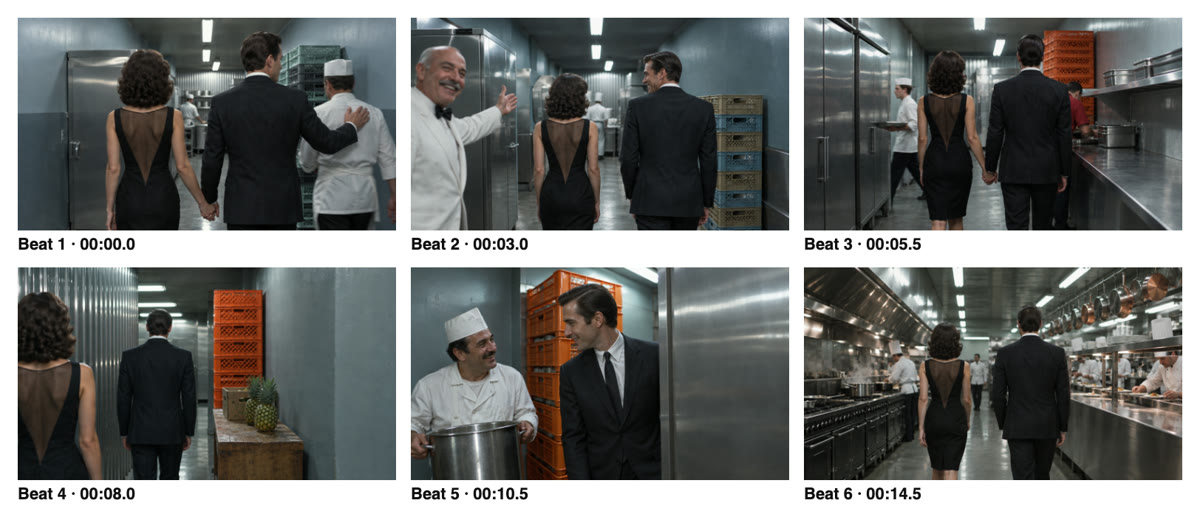
The useful distinction was between telling the model where a moment should land and giving it a path it could travel. For this shot, the quieter recipe survived more repetitions.